﻿<!DOCTYPE html PUBLIC "-//W3C//DTD XHTML 1.0 Transitional//EN" "http://www.w3.org/TR/xhtml1/DTD/xhtml1-transitional.dtd">
<html xmlns="http://www.w3.org/1999/xhtml">
<head>
<meta http-equiv="Content-Type" content="text/html; charset=utf-8" />
<title>BTL检测集团</title>
<meta name="keywords" content="Inspection、certification" />
<meta name="description" content="BTL electronic product testing and certification, providing electronic product certification services in many regions at home and abroad.  " />
<meta name="viewport" content="width=1100,target-densitydpi=high-dpi,user-scalable=yes"/>
<link rel="stylesheet" type="text/css" href="css/css.css">
<link rel="stylesheet" type="text/css" href="css/banner.css">
<link rel="stylesheet" type="text/css" href="css/animate.min.css">
<script language="JavaScript" type="text/JavaScript" src="js/jquery-1.7.1.min.js"></script>
<script language="JavaScript" type="text/javascript" src="js/banner.js"></script>
<script language="JavaScript" type="text/JavaScript" src="js/images.js"></script>
<script language="JavaScript" type="text/JavaScript" src="js/clearbox.js"></script>
<script language="JavaScript" type="text/JavaScript" src="js/wow.min.js"></script> 
<script>
function uaredirect(f){
	try{
		var b=false;
		if(arguments[1]){
			var e=window.location.host;var a=window.location.href;
			if(isSubdomain(arguments[1],e)==1){
				f=f+"/#m/"+a;b=true
			}else{
				if(isSubdomain(arguments[1],e)==2){
					f=f+"/#m/"+a;b=true
				}else{
					f=a;b=false
				}
			}
		}else{
			b=true
		}
		if(b){
			var c=window.location.hash;
			if(!c.match("fromapp")){
				if((navigator.userAgent.match(/(iPhone|iPod|Android|ios|iPad)/i))){
					location.replace(f)
				}
			}
		}
	}catch(d){}
}
uaredirect('men/industryshow.php?id=647');

wow = new WOW({animateClass: 'animated',offset:100}); 
wow.init();
$(document).ready(function(){
  $(".menu li").hover(function(){
  	$("div",this).fadeIn();
  },function(){
  	$("div",this).fadeOut();
  });
  $(".menu2 ul li").hover(function(){
  	$("div",this).fadeIn();
  },function(){
  	$("div",this).fadeOut();
  });
});
</script>
</head>
<body>
<div class="toper">
	<div class="topcen">
    <form name="topform" method="post" action="serach.php">
    	<input type="text" name="topword" value="" class="topinp" />
        <input type="submit" name="topsub" value="" class="topsub" />
    </form>
	<span class="language"><a href="cn/index.php">简</a> | <a href="ft/index.php">繁</a> | <a href="index.php" >EN</a></span>
	<div class="fl logoer"><a href="index.php" ><img src="images/logo.png"></a></div>
    <ul class="menu">
        <li><a href="product.php" class="m">Service Center</a>
    	<div>
        	<a href=product.php?cid=477>NCC RCB</a>        </div>
    </li>
        <li><a href="industry.php" class="m">Technical platform</a>
    	<div>
        	<a href=industry.php?cid=473>Mobile Communication</a><a href=industry.php?cid=479>BQB</a><a href=industry.php?cid=472>SAR / OTA</a><a href=industry.php?cid=480>IoT</a><a href=industry.php?cid=413>EMC</a><a href=industry.php?cid=424>RF</a><a href=industry.php?cid=474>Telecom</a><a href=industry.php?cid=425>Safety</a><a href=industry.php?cid=485>New Energy</a><a href=industry.php?cid=481>Other</a><a href=industry.php?cid=486>Information security</a>        </div>
    </li>
        <li><a href="zhengshu.php" class="m">Certificate</a>
    	<div>
        	<a href=zhengshu.php?cid=444>Certificate</a>        </div>
    </li>
        <li><a href="about.php" class="m">About BTL</a>
    	<div>
        	<a href=about.php?id=487>Group Profile</a><a href=about.php?id=73>Complaints process</a><a href=about.php?id=237>Declaration of impartiality</a>        </div>
    </li>
        <li><a href="join.php" class="m">Join us</a>
    	<div>
        	<a href=join.php?cid=428>Talent recruitment</a><a href=join.php?cid=429>Employees demeanor</a><a href=join.php?cid=449>The enterprise information</a>        </div>
    </li>
        
    </ul>
    </div>
    <div class="menu2">
    	<ul>
        <li>Global market access: </li>
		        <li><a href="global.php?cid=416" class="m">East Asia & South Asia</a>
        	<div>
            	<a href=news.php?cid=440>China</a><a href=news.php?cid=456>Japan</a><a href=news.php?cid=458>Indian</a><a href=news.php?cid=459>Korea</a><a href=news.php?cid=460>Taiwan</a>            </div>
        </li>
                <li><a href="global.php?cid=417" class="m">Southeast Asia</a>
        	<div>
            	<a href=news.php?cid=433>Indonesia</a><a href=news.php?cid=434>Malaysia</a><a href=news.php?cid=435>Thailand</a><a href=news.php?cid=436>Vietnam</a>            </div>
        </li>
                <li><a href="global.php?cid=418" class="m">Middle East</a>
        	<div>
            	<a href=news.php?cid=461>Saudi Arabia</a>            </div>
        </li>
                <li><a href="global.php?cid=419" class="m">Africa</a>
        	<div>
            	<a href=news.php?cid=463>South Africa</a>            </div>
        </li>
                <li><a href="global.php?cid=420" class="m">Europe</a>
        	<div>
            	<a href=news.php?cid=465>European Union</a><a href=news.php?cid=484>United Kingdom</a><a href=news.php?cid=464>Russia</a>            </div>
        </li>
                <li><a href="global.php?cid=421" class="m">South America</a>
        	<div>
            	<a href=news.php?cid=469>Argentina</a><a href=news.php?cid=470>Brazil</a>            </div>
        </li>
                <li><a href="global.php?cid=422" class="m">North America</a>
        	<div>
            	<a href=news.php?cid=466>USA</a><a href=news.php?cid=467>Canada</a><a href=news.php?cid=468>Mexico</a>            </div>
        </li>
                </ul>
    </div>
</div>
<div class="bgw">

<div class="m2pos">
 <div class="main"><span class="m2posNm">Location：<a href='index.php'>Home</a> - Technical platform - Discussion on Regulatory Blind Spots of IEC 61000-4-6 Conducted Susceptibility (C.S.)</span></div>
 </div>
 <div class="p50">


 <div class="m2proBox" style="border-bottom:0;">
<div class="main clear"><div class="lyleft">
    	<ul>
		<li><a href=industry.php?cid=473 class=>Mobile Communication</a></li><li><a href=industry.php?cid=479 class=>BQB</a></li><li><a href=industry.php?cid=472 class=>SAR / OTA</a></li><li><a href=industry.php?cid=480 class=>IoT</a></li><li><a href=industry.php?cid=413 class=>EMC</a></li><li><a href=industry.php?cid=424 class=>RF</a></li><li><a href=industry.php?cid=474 class=>Telecom</a></li><li><a href=industry.php?cid=425 class=>Safety</a></li><li><a href=industry.php?cid=485 class=>New Energy</a></li><li><a href=industry.php?cid=481 class=cur>Other</a></li><li><a href=industry.php?cid=486 class=>Information security</a></li>        </ul>
    </div>
    <div class="lyright">
<div class="pp2">
<div class="tt">Discussion on Regulatory Blind Spots of IEC 61000-4-6 Conducted Susceptibility (C.S.)</div>
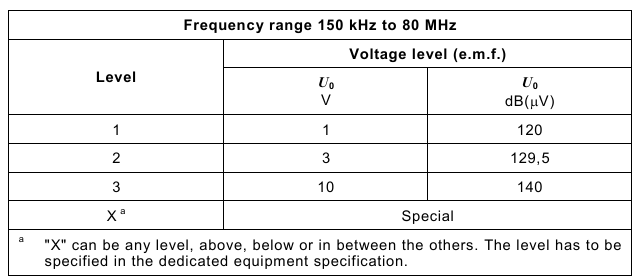
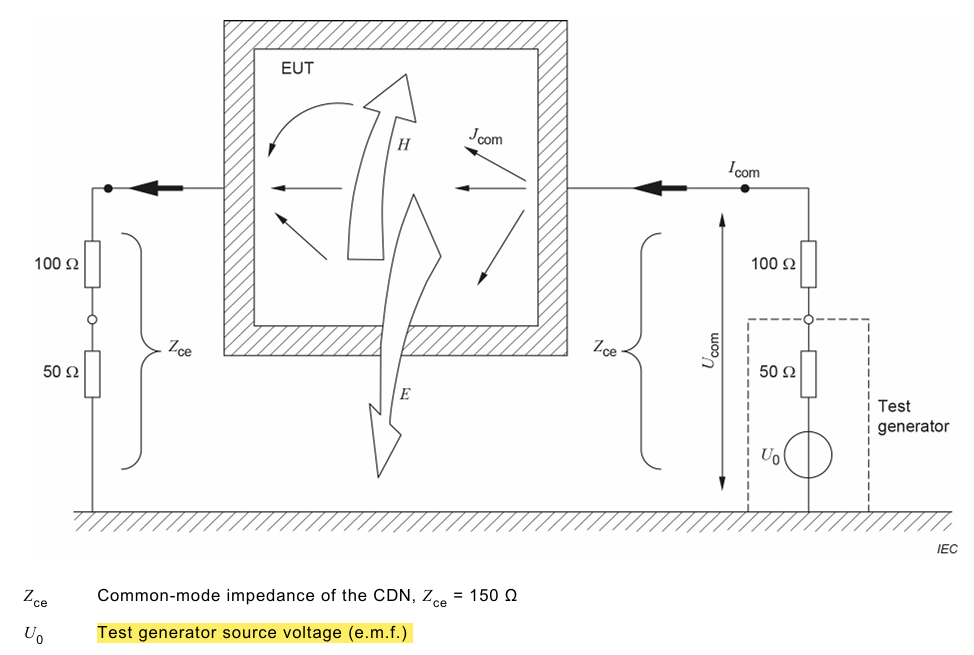
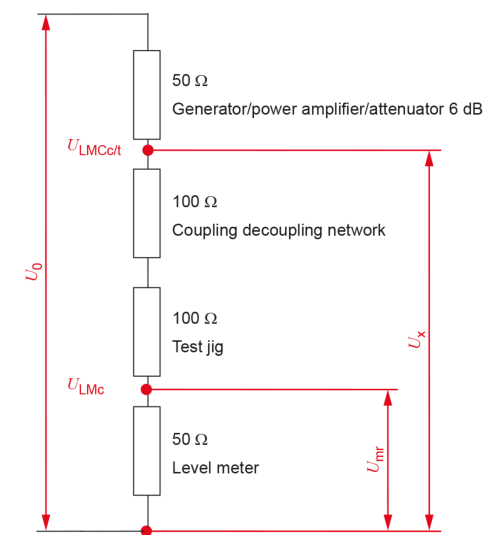
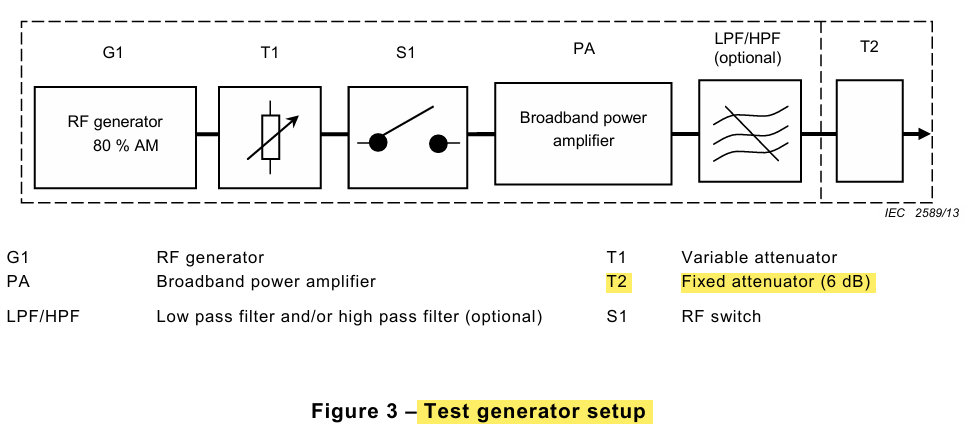
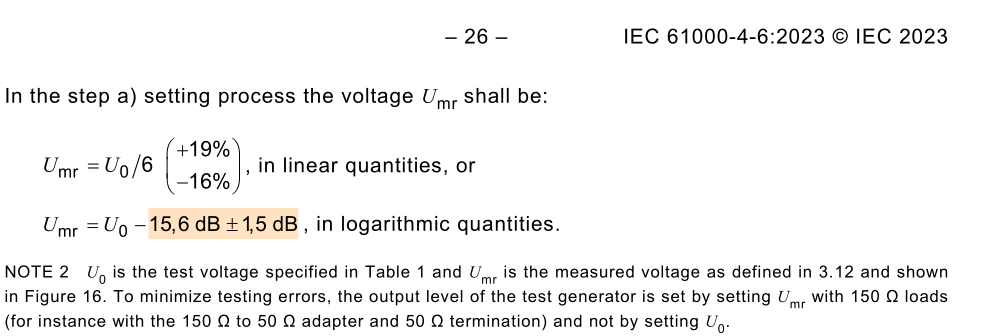
<div class="txt2 txtimg"><p><strong><span style="text-wrap-mode: nowrap;"><span style="font-family: 微軟正黑體, sans-serif; text-indent: -24px; text-wrap-mode: wrap;">In the IEC 61000-4-6 CS test, test voltage strength levels such as 1V / 3V / 10V are defined. However, whether these voltage levels—i.e., immunity test voltages—are referenced at the &quot;source&quot; of the generator or at the input of the CDN (after the 6dB attenuator) is unclear. Both interpretations are reflected in the regulatory diagrams, leading to confusion. Here, we clarify and share insights to help EMC colleagues establish a correct understanding. It is recommended that this regulatory ambiguity be proposed for amendment at the annual IEC meetings.</span></span></strong></p><p><span style="text-wrap-mode: nowrap;"></span></p><p><br/></p><p><span style="text-wrap-mode: nowrap;"></span></p><hr/><p><span style="text-wrap-mode: nowrap;"><span style="text-indent: -24px; text-wrap-mode: wrap; font-size: 17px; font-family: 微軟正黑體, sans-serif;">Immunity Strength Requirements and Corresponding Voltage U</span><span style="font-family: Verdana; text-indent: -24px; text-wrap-mode: wrap; font-size: 17px;">₀</span><span style="font-family: Verdana; font-size: 12px; text-indent: -24px; text-wrap-mode: wrap;">&nbsp;</span><span style="text-indent: -24px; text-wrap-mode: wrap; font-size: 17px; font-family: 微軟正黑體, sans-serif;">Table 1 below shows the immunity strength levels and corresponding voltages (U</span><span style="font-family: Verdana; text-indent: -24px; text-wrap-mode: wrap; font-size: 17px;">₀</span><span style="text-indent: -24px; text-wrap-mode: wrap; font-size: 17px; font-family: 微軟正黑體, sans-serif;">). In the standard, some diagrams mark the voltage U</span><span style="font-family: Verdana; text-indent: -24px; text-wrap-mode: wrap; font-size: 17px;">₀</span><span style="text-indent: -24px; text-wrap-mode: wrap; font-size: 17px; font-family: 微軟正黑體, sans-serif;">&nbsp;at the generator&#39;s source, while others define it before the 6dB attenuator (as shown in Figures 1 and 2). This leads to a potential twofold discrepancy in the immunity test voltage.</span></span><br/></p><p><span style="background-color: rgb(235, 241, 221);"><strong><span style="background-color: rgb(235, 241, 221); font-family: 微軟正黑體, sans-serif; font-size: 17px; text-wrap-mode: wrap;">Table 1</span></strong></span></p><p><span style="text-wrap-mode: nowrap;">&nbsp;<img src="/upload_files/2025-04/1745832936259782.png" title="1745832936259782.png" alt="表一.png"/></span></p><p><span style="text-wrap-mode: nowrap;"><br/></span></p><p><strong><span style="background-color: rgb(235, 241, 221);">Figure 1</span></strong></p><p><span style="text-wrap-mode: nowrap;"><img src="/upload_files/2025-04/1745832947816097.png" title="1745832947816097.png" alt="1745832947816097.png" width="700" height="471"/></span></p><p><span style="text-wrap-mode: nowrap;">&nbsp; &nbsp; &nbsp;</span></p><p><span style="text-wrap-mode: nowrap; background-color: rgb(215, 227, 188);"><strong style="text-wrap-mode: wrap;"><span style="background-color: rgb(235, 241, 221);">Figure 2</span></strong></span></p><p><span style="text-wrap-mode: nowrap;"><img src="/upload_files/2025-04/1745832956100931.png" title="1745832956100931.png" alt="1745832956100931.png" width="400" height="438"/></span></p><p><span style="text-wrap-mode: nowrap;"><span style="text-wrap-mode: wrap; font-family: 微軟正黑體, sans-serif;">In Figure 2, markings similarly mislead engineers into thinking U</span><span style="font-family: Verdana; text-wrap-mode: wrap;">₀</span><span style="text-wrap-mode: wrap; font-family: 微軟正黑體, sans-serif;">&nbsp;refers to the voltage before the 6dB attenuator.<br/>On the other hand, some regulatory diagrams define U</span><span style="font-family: Verdana; text-wrap-mode: wrap;">₀</span><span style="text-wrap-mode: wrap; font-family: 微軟正黑體, sans-serif;">&nbsp;after the 6dB attenuator, such as Figure 3 and Figure 4(Here T2 represents the 6dB attenuator.)</span></span></p><p><span style="text-wrap-mode: nowrap; background-color: rgb(215, 227, 188);"><strong style="text-wrap-mode: wrap;"><span style="background-color: rgb(235, 241, 221);">Figure 3</span></strong></span></p><p><span style="text-wrap-mode: nowrap;"><img src="/upload_files/2025-04/1745832964917867.png" title="1745832964917867.png" alt="1745832964917867.png" width="700" height="202"/></span></p><p><br/></p><p><span style="text-wrap-mode: nowrap; background-color: rgb(215, 227, 188);"><strong style="text-wrap-mode: wrap;"><span style="background-color: rgb(235, 241, 221);">Figure 4</span></strong></span></p><p><span style="text-wrap-mode: nowrap;"><img src="/upload_files/2025-04/1745832974495295.png" title="1745832974495295.png" alt="1745832974495295.png" width="700" height="310"/></span></p><p><span style="text-wrap-mode: nowrap;"></span></p><hr/><p><span style="background-color: rgb(235, 241, 221);"><strong>Interpretation of the Regulation Text and Conclusion</strong></span><br/></p><p><span style="text-wrap-mode: nowrap;"><span style="text-wrap-mode: wrap; font-family: 微軟正黑體, sans-serif; letter-spacing: 2px;">Analyzing the regulation text and formulas shown below, it is evident that the immunity test voltage is defined after the 6dB attenuator (because the formulas do not account for the 6dB attenuator). The 6dB attenuator is included in the test setup mainly to prevent damage to the generator from reflected waves. You can use a 6dB or even a 3dB attenuator</span><span style="font-family: Verdana; font-size: 12px; text-wrap-mode: wrap;">：</span></span></p><p><span style="text-wrap-mode: nowrap;">&nbsp;<img src="/upload_files/2025-04/1745832987122855.png" title="1745832987122855.png" alt="1745832987122855.png" width="700" height="239"/></span></p><p><span style="text-wrap-mode: nowrap;"><br/></span></p><p><strong><span style="text-wrap-mode: nowrap; background-color: rgb(215, 227, 188);"></span></strong></p><hr/><p><span style="background-color: rgb(235, 241, 221);"><strong>Laboratory Validation Method</strong></span><br/></p><p><span style="text-wrap-mode: nowrap;"></span></p><p>1. Directly select the internal calibration file for 150kHz/10V output (set to unmodulated mode), and measure the 150kHz VRMS using an oscilloscope before the 6dB attenuator to quickly confirm the source voltage. (If U₀&nbsp;is 10 VRMS, you should measure 20 VRMS here.)</p><p>2. The standard voltage at this point should be 20 VRMS (±1.5dB).</p><p>3. Then select the internal calibration file for 200kHz/10V output (still unmodulated mode) and again measure the 200kHz VRMS before the 6dB attenuator. The voltage should still be 20 VRMS (±1.5dB).</p><p>4. Subsequently, you can verify measurements after the 6dB attenuator and after the CDN to understand the characteristics of both.</p><p>5. The same principle applies when using spectrum analyzers for measurement.</p><p><br/></p></div>
</div>


</div>

<div style="float:right"><a href="industry.php"><img src=images/back.gif border=0></a><a href=#><img src=images/top_x.gif border=0></a></div>

</div>

</div>

 </div>


</div>
<div class="bommenu">
	<ul>
        <li><a href="product.php">Service Center</a>
    	<div>
        	<a href=product.php?cid=477>NCC RCB</a>        </div>
    </li>
        <li><a href="industry.php">Technical platform</a>
    	<div>
        	<a href=industry.php?cid=473>Mobile Communication</a><a href=industry.php?cid=479>BQB</a><a href=industry.php?cid=472>SAR / OTA</a><a href=industry.php?cid=480>IoT</a><a href=industry.php?cid=413>EMC</a><a href=industry.php?cid=424>RF</a><a href=industry.php?cid=474>Telecom</a><a href=industry.php?cid=425>Safety</a><a href=industry.php?cid=485>New Energy</a><a href=industry.php?cid=481>Other</a><a href=industry.php?cid=486>Information security</a>        </div>
    </li>
        <li><a href="zhengshu.php">Certificate</a>
    	<div>
        	<a href=zhengshu.php?cid=444>Certificate</a>        </div>
    </li>
        <li><a href="about.php">About BTL</a>
    	<div>
        	<a href=about.php?id=487>Group Profile</a><a href=about.php?id=73>Complaints process</a><a href=about.php?id=237>Declaration of impartiality</a>        </div>
    </li>
        <li><a href="join.php">Join us</a>
    	<div>
        	<a href=join.php?cid=428>Talent recruitment</a><a href=join.php?cid=429>Employees demeanor</a><a href=join.php?cid=449>The enterprise information</a>        </div>
    </li>
    		<li><p><img src="images/BTLewm.jpg" /></p><p>WeChat account</p></li>
    </ul>
</div>
<div class="end">
	<p><strong>LINK: </strong>
	<a href=https://www.globalcertificationforum.org/ target=_blank>GCF</a><a href=https://www.ptcrb.com/ target=_blank>PTCRB</a></p>
Copyright © 2008-2019 BTL Inc.  All Rights Reserved  ICP NO.18145055<a href="https://beian.miit.gov.cn" target="_blank">粤ICP备18145055号</a>&nbsp;&nbsp;技术支持：<a href="https://www.0769net.com/" target="_blank">东莞网站设计</a>
</div>
</body>
</html>